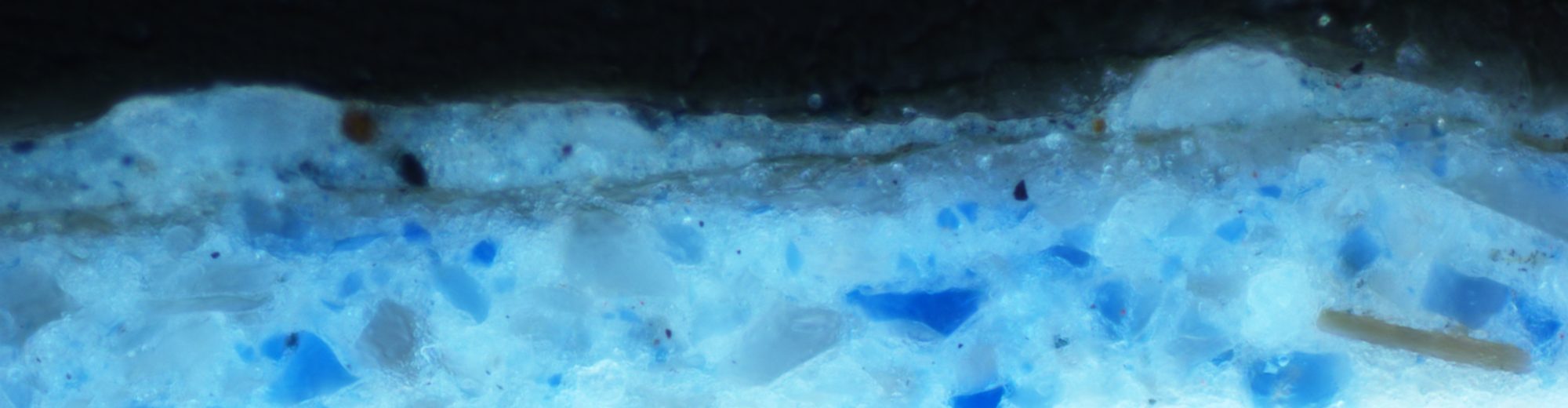
With colleagues from several European institutions (CNRS-IRCP PCMTH ; U. Antwerp ; CNR-SCITEC ; Rijksmuseum ; IPANEMA), I recently investigated the origin of color in modern pigments used in the early 20th c. After the industrial revolution, the diversity of emerging chemical syntheses gave rise to a wide range of products, characterized by a wide variety of colors, depending on their respective compositions and crystal structures.
We focused our first efforts on the cobalt phosphates and arsenates violet pigments used by Robert Delaunay, a pioneer of abstraction. A prototype of macro-scale XRPD imaging scanner developped at the AXIS group of the U. Antwerp enabled to identify several subtypes of purple inorganic pigments in paintworks by Delaunay from the collections of the Centre Pompidou in Paris.

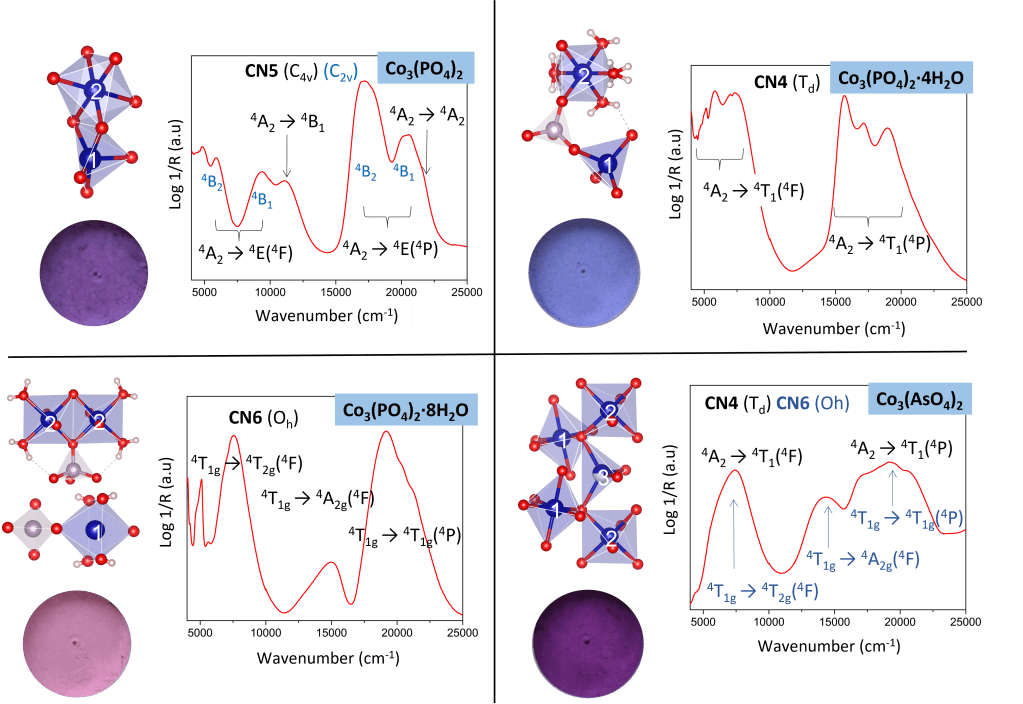
The colour of Co/As-P compounds is directly linked with the wide variety of local environments that the cobalt atom can adopt. After a synthesis of pure compounds in the laboratory, we studied their crystal structures by high-angle-resolution X-ray diffraction using synchrotron radiation, and probed the electronic transitions responsible for their optical properties via UV-vis-NIR spectroscopy. Equipped with this fundamental knowledge, it was possible to analyse micro-samples collected on paintings by Delaunay. Rietveld analysis of the collected structural data made it possible to accurately measure the distribution of metal atoms according to their sites in the structures and precisely establish the optical properties of the different Co-based pigments used by the artist [1].
 Victor Gonzalez